
India's economic engine is revving up, but navigating the global headwinds requires sharp strategy. The rupee's recent volatility against the dollar underscores the complexities facing Indian businesses, impacting everything from import-export trade to domestic inflation. This week alone, we've seen significant shifts in the IT sector, with major players announcing restructuring and a renewed focus on AI-driven solutions. Meanwhile, the burgeoning startup ecosystem continues to attract substantial funding, despite a cautious global investor sentiment. The government's recent policy announcements on infrastructure development and digitalization are poised to further shape the business landscape, creating both opportunities and challenges for entrepreneurs and established corporations alike. Understanding these market dynamics is crucial for success in today's rapidly evolving Indian economy. Stay informed with Abtak.com for the latest insights and analysis on key sectors including finance, manufacturing, and technology – empowering your business decisions in a dynamic market. Explore the complete business news section now to stay ahead of the curve.
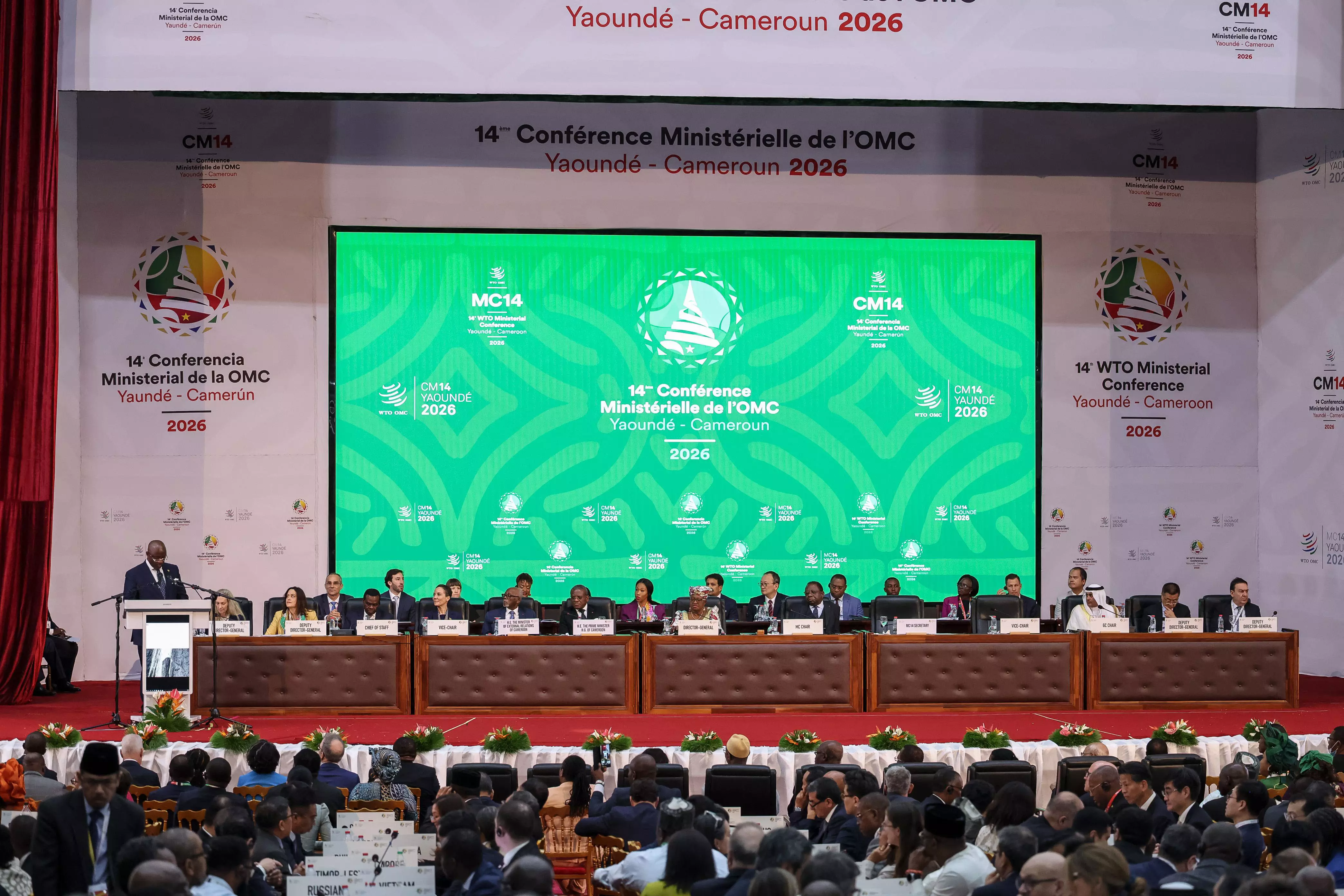

Chennai: The WTO's 14th Ministerial Conference (MC14) held in Cameroon ended without agreement on key issues, including e-commerce moratorium and expiry of safeguards against non-violation complaints against intellectual property policies. MC14 was one of the most inconclusive ministerial conferences in recent years. Despite WTO remaining ineffective in mitigating trade uncertainties, India to build coalitions to defend consensus-based decision-making at WTO, which is under threat due to growing plurilateral pacts, finds Ajay Srivastava, founder of Global Trade Research Initiative. Q) The WTO conference was held at a very crucial time for global trade. Can you tell me what were the major topics taken up during the conference? Custom duties should not be levied on the electronic transmissions was of top interest to the United States of America. Second important was the Investment Facilitation and Development agreement. It was agreed by 120 countries, including China and it was waiting for its incorporation or adoption in the WTO. Other major topics were agriculture and fisheries subsidies, WTO reforms, TRIPS non-violatiMon complaints and three or four more topics were there. But what I listed there are the most important topics where most time was devoted. Q) In agriculture India has been pressing for MSP-based procurement and public stock holding for food security and when it comes to fisheries, we were seeking protection for small scale fishermen. How did the discussions on these topics go and what were the outcomes? Agriculture, our concerns are very unique and they go back to the incorrect formulas of agreement on agriculture. For example, the government announces the MSP of say rupees 20 per kg for rice and the market price is 18 rupees per kg for rice. So the subsidy should be ideally 20 minus 18, 2 rupees per kg, but no. The WTO AoA formula calculates subsidies based on the rise prices prevailing in 1986 to 1988. That inflates the subsidies seven to eight times. And because of that, we are found to be crossing the subsidy limit at the WTO. Right now, we have a temporary reprieve from the WTO that came out from the Bali Ministerial in 2013. We are seeking some permanent solution for that, but it's not coming. So this was India's concern, but nothing happened. No deeper discussions even took place. What about fisheries in that case? Currently, the WTO members are focusing on the second phase of the fisheries subsidy agreement. It's called subsidies leading to overfishing and overcapacity. Many of the big issues economies like the European Union or China, have industrial scale fishing vessels and they go out into different continents. So they don't want others to develop their fleet. The focus is on whoever has developed four or five nations. They should retain whatever security they are given, but others should not focus. So India says no we are not in that space. Most of our fishermen are small fishermen, have artisanal fisheries and so we want 20 to 25 years transition time. But I think developed countries are sort of agreeing to give us time to 7 to 8 years but everything remains inconclusive and open so nothing is agreed on this also. Q) India was the only country opposing the Investment Facilitation and Development Act. While IFD aims at improving ease of doing business, what was India's objection on this? And what was the outcome on the discussions? India doesn't object to the contents of the IFD per se. India's opposition is to the fact that IFD is plurilateral. Plurilateral are the agreements which are agreed upon not between all, not among all the WTO members, but some of the members. So what happens is that if we allow IFD, then we have to allow many other plurilateral pacts. That means today that will be weakening the WTO structure. How? Today discussions are initiated on a topic after the consensus from all its members. The moment we allow IFD to be incorporated, WTO will be a power game, where developed countries will be introducing the subjects of their own interest in the WTO and will be ignoring the subjects of interest of the developing countries. So far it is not there, if we allow this it will be basically changing the basic structure of the WTO. WTO is for all members. WTO members, they cover 98 % of world trade, almost everything. So if some members feel something is in their interest, they can go to the WTO. Nothing stops them. Q) I think this has been a new trend, a big change towards plurilateral agreements and is this actually changing the very foundation of WTO as a multilateral agency? Let's understand how the negotiating agenda of the WTO or earlier GATT was made. Some subjects of the interest of these developed countries, some subjects of interest of developing countries, some subjects of interest of developed countries, they were all put on the agenda. And then negotiations were happening. Developing countries were agreeing to some of the demands of the developed countries and vice versa. We were also doing this because of consensus principles. This was happening but because everybody had to accommodate others' interest the moment we give up we renounce these consensus principles and all these things will go. WTO becomes a playground only for developed countries. Q) This moratorium on customs duties on electronic transactions. Now, that was brought in 1998 when the digital economy was in a nascent stage. Today, the digital economy has grown huge and it is like the US, China and EU account for almost 80 % of it. India was one of the countries seeking an end to the moratorium. How did the discussions on this topic go and what was the decision? Since the beginning, all countries are agreeing that the moratorium should be extended for two years, which means no country will be charging any custom tariffs on electronic transmission for two years. And they kept on reviving it for 26, 27 years continuously from the date of beginning. This time, the USA is doing nothing. You make it permanent. That means for the future also, no country should charge the custom tariffs on electronic transmission. Now seven of the US top tech firms say from Google to Meta to Microsoft to Amazon They corner the major chunk of electronic transmission across the world They are the pure gainers. In this time when the US is charging high tariffs above MFN tariffs on goods What's the need for waiving the tariffs on digital transmission? Today's digital economy is about 15 trillion dollars. It's going to become 50 trillion dollars as AI becomes dominant in the next one or one and a half decades. So most of the benefits will accrue not to hundreds of US firms but these seven, eight, nine, 10 of US firms. So why should we commit? Tomorrow the tariff from normal routes will be coming down and the government will need revenues and for that it has to resort to the digital. We are saying okay we agree for two years, four years but we cannot agree permanently. Q) There have been some reports saying that developing economies are losing around $10 billion annually on this customs duties on digital transactions. I think it's much more because I want to look at the future, not at the current. The way AI is pervading in all the areas of its spheres and economies generally are shifting toward digital. Then why do we block our future revenues? Q) Even in e-commerce discussions, plurilateral agreements popped up where we saw 66 members entering into a separate e-commerce agreement, and they extended the moratorium for five years. So even in those crucial things we are seeing this kind of a divide in terms of coming into a consensus between the members. If you recall how this US trade deal happened in the past 6-7 months European Union, Japan, South Korea they agreed to one sided deal totally in favor of US they surrendered so much in this digital also the only gainer is US not the Europe, not the South Korea, not Japan but everybody is supporting US because they are so scared of US they are not talking about their own gains or losses just because US is saying they have to say yes. So we say, if you feel it's good for you, please go ahead, do it. Like right now you are done for investment facilitation, for this e-commerce also, you do an FTA, implement amongst yourself, but don't bring it into the WTO because everybody is not going to gain from it. Q) In case of moratorium on e-commerce, what was the outcome of all the discussions that had happened? Outcome was that the US initially said that they want permanent freedom from custom duties. Countries like India, reluctantly agreed from two years to four years stopping on charging of custom duties. But the US was pressing for 10 years. Then Brazil put the spanner. Brazil says permanent or 10 years is too much. And So a lot of discussions yesterday. I think late night today, early morning, these discussions were continuing. And then we have some information that the Brazilian minister went back and then Brazil finally did not agree to these things. And it was not adopted. Q) Even in another topic on non-violation complaints on intellectual property policies. Now that safeguard has also expired. For the viewers can briefly explain what the safeguard is and how it has been protecting our pharma and health sector. Has there been any decision being made on extending the safeguard? WTO has an agreement called Trade-related intellectual property rights. Here, there is a provision for non-violation complaints. But non-violation complaints says even if you are not violating TRIPS provisions, there may be a case that it may be affecting our future profits. So this again was introduced in 1995 at the time of formation of WTO and every country was extending that for two years. This time nothing has been extended. So many companies, for example, in one case Novartis challenged, they introduced, without introducing a new molecule, they wanted to revive the existing patent. The case went to the Supreme Court, the Supreme Court did not agree with them. But now Novartis may again think of going to the WTO. Q) Probably our generic pharma industry will face a big challenge, if the patents are being renewed for some reason or the other. Yes, I agree with that. It's not only pharmaceuticals for agriculture also, for example, patented seeds are there. You can take action against that also. Q) Overall, how to evaluate the goals achieved by the Ministerial Conference and how it is being taken forward? Personally, I am happy because our expectations were very low from this ministerial conference. And because, so I'm happy, because we have not sacrificed our core principle by opposing IFD, number one. Number two, this e-commerce moratorium, we have not agreed because of Brazil's insistence on the permanent waiver of custom duties. So that's good. Other areas, discussion is there but no loss to India is there so discussions will keep on happening. Q) Are these discussions going to be extended to Geneva? DG WTO says they'll all be extended to Geneva starting from where it ended at the campground. And the date is not announced, but they'll be done soon. Q) How optimistic are you about WTO members arriving at fair and just decisions on these topics? Because for the past one year we haven't been seeing the US imposing trade distorting tariffs on not just emerging nations but also the undeveloped economies. What should the WTO have done to restrict members from going ahead with such measures and what has it done so far? I think there should be a debate where countries should renounce their country identities and everybody should sit quietly and discuss the objectives of WTO. WTO or its predecessor GATT have been very successful organizations. In 1950 global trade was $50 billion. Now it's $35 trillion - 600 times increase. Whereas global GDP in this time increased by 110 times only. It has increased six times compared to the growth of GDP. A large part of it is attributed to the predictable trade rules set in motion by GATT or now the WTO. So WTO has contributed a lot but right now developed countries especially the US and supported by European Union they feel that WTO is not serving their interests anymore because they feel all the manufacturing has gone to China and developing countries have their trade have grown much they feel WTO in the current format is not going to help them and that's why they want to disturb the basic architecture of the WTO. Q) Everybody is asking at this point of time what is the relevance of WTO at its current form where it can't do anything about the trade uncertainties that we are seeing around? What is the relevance of this particular multilateral agency? So Sangeetha, WTO is highly relevant. 70 % of the world trade is happening at those tariffs which countries have committed to the WTO. Except for the US, everybody is doing trade following the WTO rules. America had a role in making the WTO very effective. But now they are done with this. They feel that nobody should challenge them. WTO disputes settlement. Smaller island nations went to WTO against the US, and they obtained a verdict against the US. The US did not like this. So they have destroyed, almost destroyed, WTO's appellate body. So that means the WTO's decision-making tool is not active because the US and EU and others don't want consensus principles. They are introducing many new subjects which are not of interest to everybody else. Right now they are talking about destroying the basic structure of the WTO. Let's see what happens. Q) What should India do in this kind of a situation where the WTO itself is becoming two separate blocks? India has done well this time, even though India was a lone contender, lone defender for not allowing IFDs in corporations. India has done well. But India should not be seen as standing alone. When 166 members are there, India should invest in coalition building so that it can pursue to retain the core principles of the WTO.

New Delhi [India], December 2: The IVCA GreenReturns Summit 2024 commenced today in New Delhi, convening over 400 visionaries, investors, policymakers, and entrepreneurs to chart a transformative path for India's green economy. The Summit is dedicated to aligning India's climate goals with its trillion-dollar economic aspirations for a 'Viksit Bharat,' spotlighting high-impact investment opportunities, addressing funding gaps, and driving actionable solutions for net-zero and climate adaptation. Also Read | Mamata Banerjee Says West Bengal Yet To Get INR 14,000 Crore From Centre for Supply of ...Read More >
Vijayawada: Andhra Pradesh Chief Minister N. Chandrababu Naidu on Tuesday instructed officials to formulate proposals for constructing an iconic Deep-Technology building in the capital city of Amaravati. "I had built Hi-Tech City structure in Hyderabad to promote information technology. Now, it is time to embrace Deep-Tech and Artificial Intelligence to take advantage of the opportunities arising out of the latest technology," he underlined while reviewing the New IT Policy at the state secretariat. The Chief Minister announced that the state government will provide Rs 25 lakh as seed fundin ...Read More >

Air India launched a Black Friday Sale with discounts up to 20% on domestic flights and up to 12% on international flights to various destinations. The sale is available through the airline's website and mobile apps. Additional savings are possible with waived convenience fees and specific payment methods. The airline continues offering student and senior citizen discounts.Air India on Friday launched a limited-time Black Friday Sale offering discounts of up to 20 per cent off base fares for domestic flights within India. The Tata-owned airlines will also offer up to 12 per cent off base fares ...Read More >

Air India is also offering additional discounts through various payment offers, so you can enjoy even more savings. Air India has launched its limited-time Black Friday Sale, offering up to 20 percent off base fares for domestic flights and up to 12 percent off on international flights to destinations like the United States, Europe (including the UK), Australia, Southeast Asia, and South Asia. The sale is available exclusively on Air India's official website and mobile apps for iOS and Android. The sale runs from 00:01 IST on 29 November 2024 to 23:59 IST on 2 December 2024. The travel peri ...Read More >
Travellers on Schengen visas can add two more countries to their Europe itinerary from 2025On your next trip to Paris, make sure to add one more iconic stop to your itinerary -- Notre Dame, as the beloved cathedral reopens after five years of restoration following the devastating 2019 fire. The tragedy that nearly destroyed the iconic church in April 2019 sparked an outpouring of global emotion. Now, the cathedral -- described by historian Jacques Hillairet as "the house of the people" -- is set to open its gates on December 7, following an immense restoration effort involving a thousand skil ...Read More >

Strikes gain global traction as unions push for fair treatment, sustainable practices, and tax accountability Amazon workers in India and around the world have launched strikes and protests during the busiest shopping weekend of the year -- Black Friday to Cyber Monday. The movement, called "Make Amazon Pay," is backed by UNI Global Union and Progressive International, with the goal of holding Amazon accountable for alleged labor abuses, environmental harm, and disregard for democratic principles. From November 29 to December 2, workers across six continents and in more than 20 countries are ...Read More >

C2C Advanced Systems shares made a strong debut on the NSE SME Emerge platform on December 3, listing at a premium of 90 percent at Rs 429.40 against the issue price of Rs 226. The much-anticipated listing came despite an earlier postponement, which saw a setback for the company after over 3.72 lakh applications worth Rs 27 crore were withdrawn following regulatory action by the Securities and Exchange Board of India (SEBI). C2C Advanced Systems, a vertically integrated defence electronics solutions provider, focuses on indigenously developed products for India's defence sector. Track All I ...Read More >

Bhubaneswar: Opposition BJD and Congress MLAs Tuesday staged a walkout from the Odisha assembly, accusing the ruling BJP of failing to control prices of essential commodities and resolve the potato crisis in the state. The issues were debated in the House over the admissibility of an adjournment motion moved by the Opposition on price rise of vegetables, pulses, edible oil and fuel. The opposition members took exception to comments made by Food Supplies and Consumer Welfare Minister K C Patra that adverse climate conditions, rates in international and domestic markets, and less production by ...Read More >

ess than 24 hours after he asserted in Nigeria's Abuja that stepping out of the comfort zone, innovating and creating new paths has now become the very essence of today's India, Prime Minister Narendra Modi on Monday told the gathering of world's most influential leaders converged in Rio de Janeiro for the G20 Summit that the main reason for India's success lies in his government's 'back to basics' and 'march to the future' approach. Addressing the G20 session on 'Social Inclusion and the Fight Against Hunger and Poverty' at the bayside museum of modern art during the two-day 19th G20 Summit, ...Read More >
India readies a sea change for domestic shipping as well as global shipping through key bills The centre will move the Merchant Shipping Bill, 2024 and Coastal Shipping Bill, 2024 for consideration and passing during the winter session of parliament. These key legislations are aimed at holistic growth of Coastal Shipping and reducing the compliance burden for ships under the Indian flag. "The Merchant Shipping Bill deals with implementation of India's obligations under various International Conventions and technical aspects maritime and shipping sector's regulations. Coastal Shipping Bill wi ...Read More >
India Quality Conclave 2024: Driving Excellence in Quality Management Presto Group proudly presents the India Quality Conclave 2024, set to take place on November 30 at Crowne Plaza, New Delhi. This transformative event will bring together industry leaders from packaging, FMCG, pharmaceuticals, and other sectors to discuss cutting-edge quality improvement practices. Key highlights include strategies for cost reduction, boosting QC team productivity, and ensuring hassle-free audits. Attendees will benefit from keynote speeches, case studies, panel discussions, and a special book launch, Per ...Read More >

Amazon India's first Black Friday Sale starts Nov 29, offering huge discounts on electronics, home appliances, fashion, and more. Amazon India is gearing up for its first-ever Black Friday Sale, bringing the globally celebrated shopping bonanza to Indian customers. Starting November 29, 2024, and running until December 2, this five-day event promises incredible discounts across categories like electronics, home appliances, fashion, and more. Top brands such as Apple, Samsung, Sony, and LG are on the roster, making it a prime opportunity to snag premium gadgets and household items at unbeatabl ...Read More >
NEW DELHI: Lieutenant governor VK Saxena has given his approval to the reconstitution of Delhi Building and Other Construction Workers Welfare Board, paving the way for govt to prepare a scheme to provide compensation to the construction workers who lost work due to the implementation of GRAP IV provisions. The board was not in place for the last couple of years. While giving his nod to its reconstitution, LG directed that immediate steps should be taken to implement Supreme Court directions to provide subsistence allowance to workers affected due to restrictions on construction activities be ...Read More >

JAKARTA (Reuters) - Indonesia and Canada on Monday signed a Comprehensive Economic Partnership Agreement (CEPA) that aims to strengthen economic ties between the two G20 members, three years after negotiations began. The agreement will take effect in 2026 and was signed in Jakarta by trade ministers of both countries. Indonesia's trade minister, Budi Santoso, said Indonesia appreciated Canada's support for its plan to prioritise its critical minerals sector, which was vital for its sustainable growth. "Together, we advance sustainable critical mineral management, supporting Indonesia's net ...Read More >

To print this article, all you need is to be registered or login on Mondaq.com. The Swedish Patent and Registration Office (PRV) has joined the Madrid e-filing system. This update, which has recently been implemented, allows international trade mark registrations based on Swedish marks to be filed and administered through an online portal provided by the World Intellectual Property Organization (WIPO). The update is a positive change for businesses, as it significantly eases the process of using Sweden as the basic application and provides for quicker and easier access to information. All co ...Read More >
As per Moneycontrol's calculations, a 7 per cent growth in the remaining two quarters will put India's GDP at 6.5 per cent. The Indian economy would find it challenging to achieve over 7 per cent growth for the fourth consecutive year, economists said. They pointed out that the second-quarter (Q2) Gross Domestic Product (GDP) data, which was announced on November 29, has made the task even more daunting for the government. "A sharper than expected growth slowdown in Q2 has tilted risks to our outlook of 6.8 per cent for the current fiscal downwards," said DK Joshi, chief economist, Crisil. ...Read More >
FRANKFURT (Reuters) - Import tariffs expected to be implemented by the administration of U.S. President-elect Donald Trump could lower economic growth and inflation in the 20 nations sharing the euro, European Central Bank board member Piero Cipollone said on Tuesday. Most economists agree that the possible tariffs would impact growth, though views diverge on the effect on consumer prices. Some argue the U.S. trade barriers will push up the value of the dollar, making imports of key commodities more expensive, while likely retaliation from Europe will also raise costs. Cipollone, speaking i ...Read More >

Chandigarh [India], December 3 (ANI): Punjab Legislative Assembly Leader of Opposition and Congress leader Partap Singh Bajwa on Tuesday, slammed the BJP-led central government for neglecting the interests of farmers in Punjab and Haryana. Bajwa's scathing attack comes amidst growing discontent among farmers in the region, who feel their concerns have been ignored by the ruling party. "Ever since the BJP government has come to power, they have not taken a single decision that is in the interest of the farmers of India, especially the farmers of Punjab and Haryana. It is their fundamental rig ...Read More >

The escalating conflict could upset a hard-fought consensus that G20 negotiators reached around 5 a.m. on Sunday, after an overnight push to ready the joint statement for final review by leaders arriving in Rio. That preliminary consensus after six days of negotiations included streamlined language about global conflicts including the war in Ukraine, focusing on the need to negotiate peace rather than criticism of any participants. However, sources said even that "simpler" consensus may now be up for reconsideration following the Russian air strike and the prospect of further escalation. Un ...Read More >

Delhi is facing worsening pollution and erratic weather patterns, with the air quality regularly reaching dangerous levels. This is partly due to climate change, with temperature rises and unpredictable rainfall patterns caused by global warming. The industrial revolution has played a significant role, contributing to the rise in global temperatures. The effects are already being felt, with 2024 witnessing record-breaking heat in India. Despite this, there is little action from society or leadership, with courts repeatedly stepping in to address issues like pollution and farm fires. The need f ...Read More >
Trump warns BRICS nations against replacing US dollar Dec 2 (Reuters) - A gauge of emerging market stocks rose on Monday, driven by positive manufacturing data from China and expectations of continued policy support from Beijing, while India's rupee hit a record low because of weaker-than-expected economic data. As of 0932 GMT, the MSCI's index for emerging market stocks had risen by 0.7%, on track for its biggest percentage gain in over three weeks. China's blue-chip CSI 300 climbed 0.8%, and the Shanghai Composite index jumped 1.1% after a private survey indicated that Chinese factory act ...Read More >

Sundar Pichai, CEO of Google, is facing legal trouble after a Mumbai court issued a notice due to YouTube's failure to comply with a previous order. The issue revolves around an offensive video about Dhyan Foundation’s founder, Yogi Ashwini, which was supposed to be removed globally but remains accessible outside India. The court is questioning Pichai on why he shouldn't face consequences for not following the order. Meanwhile, satellite internet services are set to launch in India, with Jio, Airtel, Starlink, and Amazon Kuiper competing for market dominance. The government is preparing to all ...Read More >
The U.S. dollar continued its strong run on Monday, bolstered by soaring Treasury yields and expectations of limited Federal Reserve rate cuts. Meanwhile, the yen steadied ahead of a key speech by Bank of Japan Governor Kazuo Ueda, where he may hint at a possible rate hike in December, with markets pricing a 55% chance of such a move. Japanese Finance Minister Katsunobu Kato's warning on yen intervention caused a temporary pullback, while the dollar index touched a one-year high of 107.07. Analysts forecast further dollar gains as U.S. economic policies and performance outshine global peers. K ...Read More >
TIPS Music, one of India's leading music labels, has received a 'Buy' rating from YES Securities as it initiated coverage on the firm, with a target price of Rs 1,050, indicating a potential upside of 18% from the current market price of Rs 888.65. Shares of TIPS Music climbed as much as 1.7% on Tuesday to Rs 888.65 on BSE. Yes Securities has valued TIPS Music at a Price-to-Earnings (P/E) ratio of 47 times based on projected earnings per share (EPS) for September 2026, reinforcing its bullish recommendation. The bullish stance comes as TIPS Music leverages industry tailwinds, such as the rapi ...Read More >

The Minister for Information, Communication, Technology and National Guidance, Hon. Chris Baryomunsi has unveiled government plans to extend internet connectivity to all sub-counties through a loan acquired from the Exim Bank of China. Baryomunsi said that with the US$150 million, government will go beyond its ministries, departments, agencies (MDAs) and district headquarters) to connect all sub-counties to the National Backbone Infrastructure (NBI). "This is vital for ensuring that all regions benefit from the digital economy. Last mile connectivity, the final segment connecting the NBI to ...Read More >
Amazon Web Services (AWS) has launched the Quantum Embark advisory program to help businesses prepare for the emerging quantum computing era. The program comes as quantum stocks, like IonQ, see significant growth, driven by innovations in drug discovery, cryptography, and materials science. Companies like D-Wave and Rigetti are advancing quantum technologies, with D-Wave focusing on optimization problems and Rigetti on scalable quantum systems. Despite early financial losses, these companies are gaining traction with government contracts and commercial clients. As quantum computing evolves, in ...Read More >
Anuj Kumar, Director & CEO of CAMS, highlights that despite recent market corrections, the company expects FY25 to be one of its strongest years. CAMS continues to dominate by winning 70-80% of new bids, focusing on execution and margin expansion, and anticipates significant revenue and profit growth driven by mutual funds and associated business lines.Anuj Kumar, Director & CEO, CAMS, says there has been some market correction and some flattening of the mood in the last two months. But as things come back, we should be holding our projections and FY25 should be one of the strongest years in t ...Read More >
The Chinese yuan was also facing its own challenges from the growing threat of more U.S. tariffs on China, pushing it down to a 13-month trough. Japan's tech-heavy Nikkei jumped 1.6% as of 0200 GMT, and South Korea's KOSPI advanced 1.7%. Taiwanese shares gained 1.1%. Australia's stocks benchmark rose 0.7% and reached a fresh all-time high. However, Chinese stocks were under pressure, with Hong Kong's Hang Seng edging slightly lower and mainland blue chips falling 0.3%. MSCI's broadest index of Asia-Pacific shares added 0.7%. Both S&P 500 and Nasdaq futures were flat after the cash indexes ...Read More >
Since our last publication, the higher risk-sensitive EUR/CHF cross pair has wobbled as it grappled with the Eurozone's economic weakness and a looming unfavorable external trade environment due to further global supply chain disruptions due to incoming US President-elect Trump's 10% to 20% tariffs threat on other countries' exports to the US, inclusive of the Eurozone. The EUR/CHF inched lower in the week of 18 November (ex-post US Presidential election outcome on 6 November) and retested a key intermediate support of 0.9255, a key swing low made almost a year ago on 29 December 2023. Fig 1 ...Read More >
Still, the ongoing U.N. climate talks have thrown a spotlight on their efforts to tackle global warming. While the COP29 summit in Baku, Azerbaijan, is tasked with agreeing a goal to mobilize hundreds of billions of dollars for climate, leaders of the Group of 20 major economies half a world away in Rio are holding the purse strings. G20 countries account for 85% of the world's economy and are the largest contributors to multilateral development banks helping to steer climate finance. "The spotlight is naturally on the G20. They account for 80 percent of global emissions," U.N. Secretary Ge ...Read More >