
Stay updated with the latest Other news, articles, and insights from trusted sources. Explore in-depth coverage and expert analysis on Other topics.

Key words: Administrative fine, Data subject rights, Personal data breach, Accountability, Data security, Sensitive data The President of the Personal Data Protection Office has imposed a fine on the "Stop LGBT" Legislative Initiative Committee for the way it conducted the collection of signatures. This was because the lists with signatures for the project banning assemblies on LGBT rights were left lying unsecured in the church. According to information received by the DPA, the "Stop LGBT" Legislative Initiative Committee, which collected signatures, did so in such a way that the lists of support were not protected. The controller confirmed that the described situation took place, but in his opinion there was no breach of the GDPR provisions. However, the proceeding conducted by the President of the DPA revealed a breach of a number of provisions of the GDPR, including those relating to personal data security. In the case of the "Stop LGBT" Legislative Initiative Committee, the risk analysis was conducted, but it did not have a date. The analysis also identified only three situations, the occurrence of which could give rise to a risk of breach to the rights and freedoms of natural persons: The risk for each of the listed vulnerabilities has been determined as 'negligible'. The risks of someone copying/photographing the list with addresses and PESEL number, or of other signatories seeing who among their neighbours had already signed, were ignored. Not to mention bystanders who could also view those data. The controller assumed that, at low risk, it would be sufficient for the signature cards to be constantly under the supervision of 'signature collectors'. As the controller did not recognise the risks for the data subjects, it did not foresee any risk mitigation measures such as shielding the already collected signatures from the view of further persons also expressing support for the legislative initiative or bystanders. The President of the Personal Data Protection Office has imposed a fine of 2 500 € for infringement of Articles 24, 25, 32, 33 and 34 of the GDPR. In the decision, the President of the Personal Data Protection Office indicates how to act correctly in such a situation. The GDPR does not contain a list of technical recommendations for such cases. However, it says what to take into account in order to correctly protect the entrusted data, especially sensitive data. Signature collectors must ensure that the data are properly secured. It is necessary to constantly supervise the data already collected and protect it from subsequent signatories by covering the part of the list that is already filled with personal data. It is unacceptable to leave such lists unattended. An incorrect risk analysis also caused the controller to act inappropriately, failing to notify the breach to the supervisory authority. It does not need to do so if the likelihood of a risk of breach to the rights and freedoms of natural persons is low. This was not the case here. This is, after all, about leaving a list with a huge amount of personal data unattended. The occurrence of a high risk to the rights or freedoms of individuals requires the data controller to communicate the incident to data subjects.

* Commoditisation and similarity of products and services with competitors will have the most significant impact on how businesses deliver customer experiences over the next two years, according to the latest IDC InfoBrief commissioned by Affinidi * However, businesses who are looking to hyper-personalise their products as a competitive differentiator are facing several obstacles in addressing the privacy-personalisation dilemma, with 56% of them highlighting data collection and management to be a key challenge. * To truly enhance customer experiences through more personalised insights, they m ...Read More >


Bangalore - Tenable®, the Exposure Management company, today released its 2025 Cloud Security Risk Report, revealing that cloud workloads supporting artificial intelligence (AI) initiatives are more vulnerable than traditional workloads. The report found that 70 per cent of AI workloads across AWS, Azure and GCP contain at least one unremediated critical vulnerability, compared to 50 per cent of non-AI workloads, highlighting the mounting risk as organisations embed AI into their business operations. AI workloads, with their vast training datasets and model development processes, are an incre ...Read More >


MUMBAI: India is witnessing a sharp increase in companies purchasing cyber insurance and expanding cover sizes, as boards and management reassess digital risks following high-profile global outages, like the one involving Jaguar Land Rover, and tighter data protection rules. The time taken to put a cyber insurance cover in place has shrunk dramatically to just a few days from six to seven months earlier, as companies move quickly to hedge against operational disruption, regulatory fines and potential indemnification exposure, said insurers and brokers. At least one large Indian company has i ...Read More >
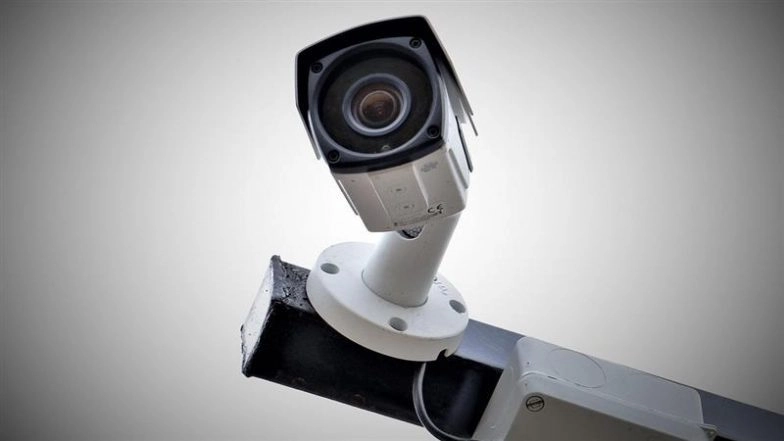

Bengaluru, March 30: India is set to enforce a major overhaul of its surveillance ecosystem from April 1, 2026, with a strict ban on non-certified internet-connected CCTV cameras, particularly those linked to Chinese manufacturers. The move marks a decisive push toward strengthening data security and reducing dependence on foreign hardware flagged as potential cybersecurity risks. The new rules primarily impact global surveillance giants like Hikvision and Dahua, which together held a significant share of India's CCTV market until recently. Under the updated Standardisation Testing and Qualit ...Read More >

New Delhi -- As organisations aggressively pursue technologies like artificial intelligence, a dangerous disconnect is growing between innovation and security. Data from Tenable's State of Cloud and AI Security 2025 report reveals that critical strategic errors - from a reliance on outdated assumptions to the use of purely reactive performance metrics - are leaving organisations more vulnerable than ever. This approach challenges the C-suite's decision-making and priorities, suggesting that the very strategies intended to drive growth are instead creating a perfect storm for breaches. The res ...Read More >

New Delhi [India] September 16 (ANI): The Reserve Bank of India (RBI) has rolled out detailed regulatory guidelines for Payment Aggregators (PAs) and recommended baseline technology standards for Payment Gateways (PGs), to ensure safety, transparency and resilience in the fast-growing digital payments ecosystem. The central bank, in its notification titled "Guidelines on Regulation of Payment Aggregators and Payment Gateways", said that while PAs handle funds and therefore require direct regulation, PGs will be treated as technology providers and are encouraged to adhere to prescribed securit ...Read More >


Mumbai, July 3 (SocialNews.XYZ) At least 118 million women consumers in India have entered the credit mainstream for the first time in the last 10 years, unlocking opportunities that were previously unavailable to them, according to a report on Thursday. Over 714 million individuals have gained access to formal credit, positively impacting households across the country over the past two decades, said the report by TransUnion CIBIL, released at a conference here. Retail delinquencies (balance-level, at 90 days or more past due) have also improved by 130 bps in the last 10 years, the findings ...Read More >
New Delhi [India] September 16 (ANI): The Reserve Bank of India (RBI) has rolled out detailed regulatory guidelines for Payment Aggregators (PAs) and recommended baseline technology standards for Payment Gateways (PGs), to ensure safety, transparency and resilience in the fast-growing digital payments ecosystem. The central bank, in its notification titled "Guidelines on Regulation of Payment Aggregators and Payment Gateways", said that while PAs handle funds and therefore require direct regulation, PGs will be treated as technology providers and are encouraged to adhere to prescribed securit ...Read More >

The EU's aggressive stance against Big Tech has inspired governments worldwide, from Australia to the US, to draft their own regulatory frameworks. The European Union (EU) has long prided itself on being a global leader in the regulation of Big Tech, with initiatives like the General Data Protection Regulation (GDPR) and the more recent Digital Markets Act (DMA) and Digital Services Act (DSA). These frameworks are seen as trailblazing attempts to curb the monopolistic tendencies and societal harms posed by major technology firms. But even as the EU ramps up enforcement, a curious countercurre ...Read More >

New Delhi [India], July 2 (ANI): Indian companies paid a median payment of USD 481,636 (over Rs 4 crore), spending an average of USD 1.01 million on recovery, highlighting the broader financial toll of ransomware cyber attacks, says a report by UK-based global security solution firm Sophos. It stated that the median ransom demand fell by 52 per cent, from USD 2 million to USD 961,289, while the median payment dropped even more sharply by 79 per cent. Also Read | UEFA Women's Euro 2025 Live Streaming, Switzerland vs Norway: How To Watch Free Live Telecast of SUI-W vs NOR-W on TV and Online St ...Read More >
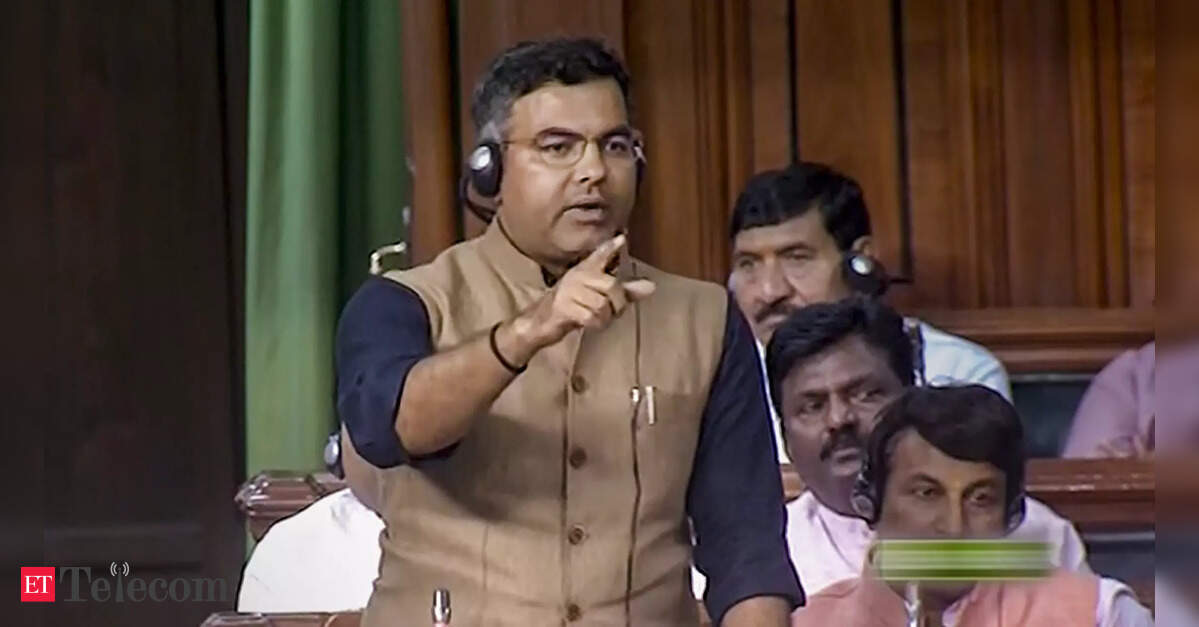

NEW DELHI: Delhi Public Works Department (PWD) Minister Parvesh Singh Sahib, from Wednesday, has initiated a staggered removal of Chinese Hikvision's 1.4 lakh CCTV cameras installed citywide. These will be replaced with modern and secure cameras, complying with data security norms, and supported with a robust supply and service network. The PWD has installed a total of 2,74,389 CCTV cameras across the national capital: 1.4 lakh units in the first phase, between September 2020 and November 2022, and 1,34,389 units in the second phase, between June 2025 and March 2026, according to a report by ...Read More >