
India's political landscape is ablaze with activity! From the ongoing debates surrounding the new farm bills and their impact on rural India, to the upcoming state elections shaping the national narrative, the stakes couldn't be higher. Key political figures are maneuvering strategically, with alliances shifting and power dynamics constantly in flux. The opposition's challenge to the ruling party is intensifying, sparking vigorous debates on crucial policy matters including economic reforms and social justice initiatives. Parliamentary proceedings are filled with heated exchanges, reflecting the deep divisions within the nation. This evolving political climate directly impacts the lives of every Indian citizen, influencing everything from economic opportunities to social welfare programs. Stay informed about the latest developments in Indian politics, from crucial legislative decisions to grassroots movements, by exploring Abtak.com for in-depth analysis and breaking news updates. Understanding the intricacies of our political system is crucial; stay engaged, stay informed, and stay ahead.
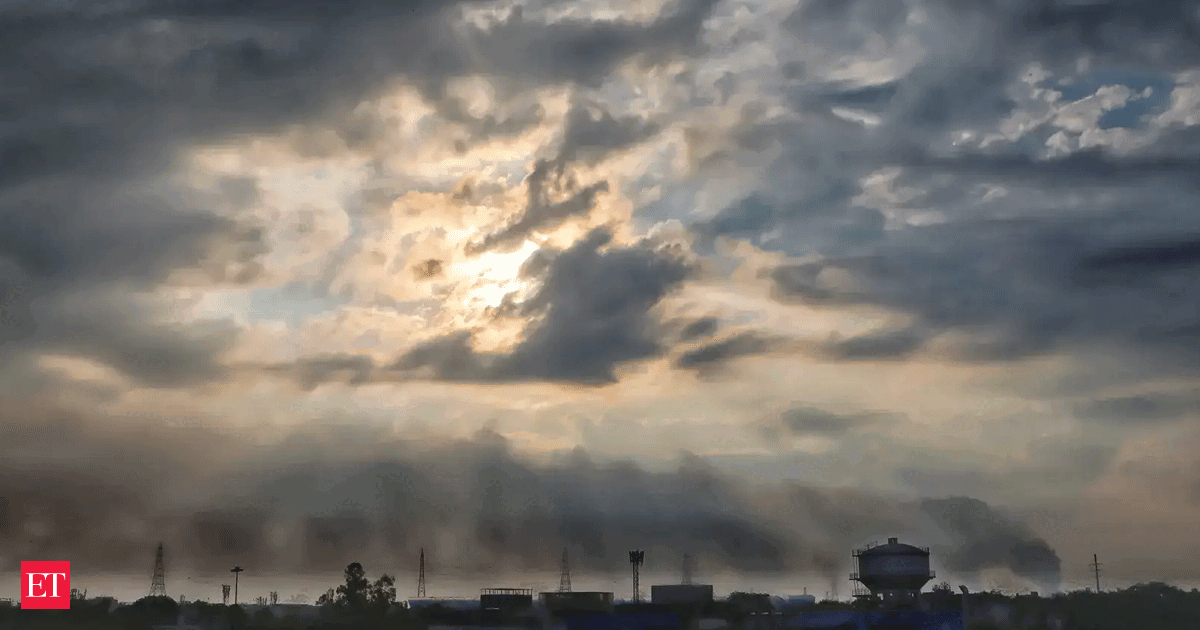

New Delhi: The withdrawal of the southwest monsoon began from parts of western Rajasthan on Sunday, three days ahead of the expected schedule, said the India Meteorological Department. The primary rain-bearing system usually makes its onset over Kerala by June 1 and covers the entire country by July 8. It starts retreating from northwest India around September 17 and withdraws completely by October 15. This year, the monsoon covered the entire country nine days before the usual date of July 8. This was the earliest the monsoon has covered the entire country since 2020, when it did so by June 26. It had reached Kerala on May 24, its earliest onset over the Indian mainland since 2009, when it arrived on May 23. The line of withdrawal of the southwest monsoon passed through 30.5°N /73.5°E, Sri Ganganagar, Nagaur, Jodhpur, Barmer and 25.5°N /70°E on Sunday. Conditions are favourable for further withdrawal of southwest monsoon from some more parts of Rajasthan and some parts of Punjab and Gujarat during the next two-three days. The country has received 7.1% more rainfall than the long period average since June, with most parts of the country receiving excess rainfall during the key period for kharif crops such as rice and pulses. India has already witnessed above-normal rainfall in the first half of the monsoon season, with some regions, including Himachal Pradesh, reporting flash floods and landslides. The southwest monsoon provides about 70% of India's yearly rain and is vital for the agriculture sector, which contributes 14% to the country's gross domestic product and supports more than half of its 1.4 billion population.
Tamil Nadu Weather Update: Tamil Nadu, Puducherry and Karaikal are expected to experience heavy to very heavy rainfall starting Thursday, the India Meteorological Department (IMD) has said in its latest bulletin. According to the IMD bulletin on Dec. 12, Tamil Nadu, Puducherry and Karaikal are very likely to witness isolated heavy to very heavy rainfall on Dec. 12, 13, 16 and 17 due to the northeast monsoon spell that is entering its next phase. "Thunderstorm with intermittent spells of heavy rain is likely to occur in some areas," the Chennai Met Office said in a bulletin at 11:30 am on Thur ...Read More >
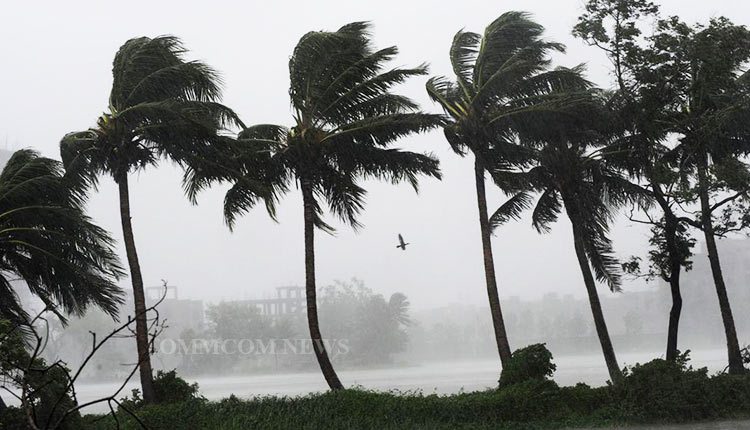

Bhubaneswar: A low-pressure area has developed over the Northwest Bay of Bengal off the Odisha coast, according to the India Meteorological Department (IMD). The system, which formed at 8:30 am today, is likely to move slowly northwards and intensify into a more marked low-pressure system over the next 48 hours. According to the latest weather update, the associated cyclonic circulation extends up to 7.6 km above mean sea level, tilting southwards with height. This weather system may bring light to moderate rainfall with isolated heavy rainfall to the coastal areas of West Bengal and Odisha. ...Read More >

New Delhi: The Enforcement Directorate (ED) on Friday carried out searches at 15 places in Mumbai and Kochi in connection with the Mithi River desilting scam that caused a wrongful loss of more than Rs 65 crore to the Brihanmumbai Municipal Corporation (BMC), official sources said. The massive crackdown is underway at the premises across Mumbai and Kochi linked to the accused and suspects as part of an ongoing probe into alleged financial irregularities. According to the sources, the searches are being carried out under the provisions of the Prevention of Money Laundering Act (PMLA) at locat ...Read More >
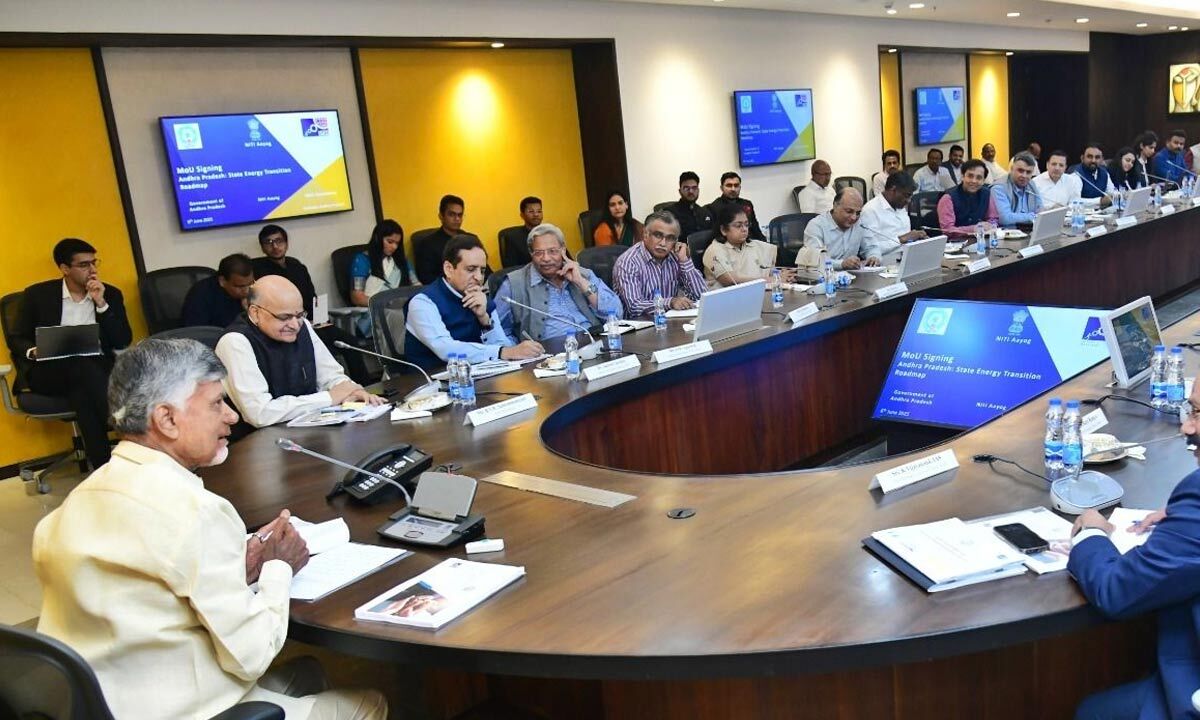

Vijayawada: Chief Minister N Chandrababu Naidu on Friday unveiled an ambitious vision to transform Visakhapatnam into a new Mumbai over the next seven years. He directed officials to develop the 'Visakha Economic Region' as AP's primary growth engine, aiming for a staggering $120 billion economy from this region by 2032. The proposed economic region encompasses eight districts, including Visakhapatnam, Vizianagaram, Srikakulam, Anakapalli, Kakinada, East Godavari, Alluri Sitharama Raju (ASR), and Manyam. The Chief Minister has instructed the officials to launch projects that will significantl ...Read More >

India's growth in gross domestic product (GDP) of 5.4% in the three months ended 30 September, or the second quarter of 2024-25, was a shocker. It undershot even the most pessimistic forecasts. It's the lowest level seen since the third quarter of 2022-23 and a sharp drop from 8.1% growth in the same period last year and also from 6.7% in the first quarter of 2024-25. The consensus expectation stood at about 6.5% and the Reserve Bank of India (RBI) was expecting around 7% growth till its October policy, only to pare it to 6.8%. Growth in gross value added (GVA), which is the preferred measure ...Read More >

New Delhi [India], January 21 (ANI): The Centre is expected to continue its fiscal consolidation efforts in FY26, with a fiscal deficit target of 4.5 per cent of GDP, according to a report by Emkay Research. For FY25, the report noted that the fiscal deficit is estimated to track close to 4.7 per cent, while states are likely to record a fiscal deficit of 3.2 per cent of GDP. It said "we do not see the Centre deviating from its consolidation path in FY26, and is likely to target 4.5 per cent GFD/GDP. States, on the other hand, are likely to now hug the 3 per cent of GDP target (+/-0.2 per ce ...Read More >

Uttarakhand (Dehradun) [India], May 19 (ANI): The Indian Meteorological Department (IMD) has issued an orange alert for heavy rain in the hilly districts of Uttarakhand, effective today and tomorrow. In light of this warning, the Uttarakhand Police have issued a safety advisory for pilgrims undertaking the Chardham Yatra. Pilgrims are advised to exercise caution while travelling, consider the weather conditions, and call 112 in case of any emergency." Authorities are working to ensure public safety and minimise disruptions," said the police authorities. In light of the forecast, the Uttarakh ...Read More >
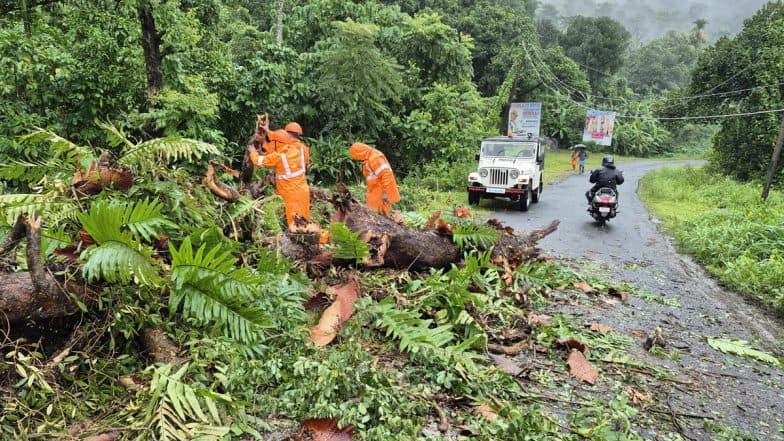

Thiruvananthapuram, May 27: Monsoon rains accompanied by gusty winds continue to lash Kerala, causing widespread damage across the state. Several incidents of trees being uprooted, house wall collapses, and electrical short circuits have been reported from different parts of the state. Since the onset of the monsoon last week on May 24, three casualties have been reported, prompting the state government to open a dozen relief camps in affected districts of the state. The most major disruption on Tuesday has been the delay in train services across Kerala after fallen trees blocked railway trac ...Read More >


Mumbai: The Reserve Bank of India (RBI), in its latest Monetary Policy Committee (MPC) meeting for FY2025-26, announced a 0.50 per cent cut in the repo rate, bringing it down to 5.5 per cent. Alongside this, key changes in CRR, inflation forecasts, and policy stance were also introduced to boost economic growth. Repo Rate Cut RBI reduced the repo rate by 0.50 per cent, bringing it down from 6.00 per cent to 5.50 per cent. This means loans may become cheaper for borrowers. CRR Cut for Liquidity RBI also reduced CRR (Cash Reserve Ratio) by 1 per cent, from 4 per cent to 3 per cent, to add mo ...Read More >


VIJAYAWADA: Chief Minister N Chandrababu Naidu has directed the officials to develop 'Visakha Economic Region' as the growth engine of Andhra Pradesh, with an aim to transforming it into a USD 120 billion economic region by 2032. He emphasised the need to develop Visakhapatnam on the lines of Mumbai in the next seven years. The Economic Region consists of eight districts including Visakhapatnam, Vizianagaram, Srikakulam, Anakapalli, Kakinada, East Godavari, ASR, and Manyam. The Chief Minister instructed officials to develop projects that would boost economic activity across this eight-distri ...Read More >


New Delhi, June 7 (SocialNews.XYZ) The Reserve Bank of India (RBI) has chosen to frontload its rate cuts, turning to support growth amid benign inflation prospects, according to a Crisil report, which expects one more repo rate cut this fiscal (FY26), and a pause after that. The global ratings agency also expects India's GDP at 6.5 per cent this fiscal, with risks on the downside due to US tariff hikes. Crisol listed some factors which are expected to help domestic growth hold up against global tariff risks. "Positive outlook on rains and crude oil prices and healthy external accounts -- lo ...Read More >


Itanagar, Jun 7 (PTI) The flood situation in Arunachal Pradesh improved on Saturday with water levels of most rivers receding, even as 33,000 people in 24 districts remained affected, officials said. Twelve people lost their lives and one person went missing in rain-related incidents, including landslides, after the monsoon set in, they said. In its daily report, the State Emergency Operation Centre (SEOC) said 33,200 people in 215 villages remained affected due to floods and landslides in the state. The water levels of most major rivers and their tributaries were showing a receding trend o ...Read More >

The National Investigation Agency (NIA) has charged five individuals, including goldy Brar, in relation to the 2024 Gurugram club bombing plot, as revealed in a recently filed chargesheet. This case involves a conspiracy to bomb two clubs, aiming to disrupt communal harmony in Haryana, with the banned terrorist group Babbar Khalsa International (BKI) implicated. The NIA's investigation highlights the severity of the plot. Those charged include satinderjit Singh (Goldy Brar), Sachin Talian, Ankit, Bhavish, and Randeep Singh. News Directory 3 provides crucial updates on sensitive cases such ...Read More >

As per Moneycontrol's calculations, a 7 per cent growth in the remaining two quarters will put India's GDP at 6.5 per cent. The Indian economy would find it challenging to achieve over 7 per cent growth for the fourth consecutive year, economists said. They pointed out that the second-quarter (Q2) Gross Domestic Product (GDP) data, which was announced on November 29, has made the task even more daunting for the government. "A sharper than expected growth slowdown in Q2 has tilted risks to our outlook of 6.8 per cent for the current fiscal downwards," said DK Joshi, chief economist, Crisil. ...Read More >
Chandigarh [India], December 3 (ANI): Punjab Legislative Assembly Leader of Opposition and Congress leader Partap Singh Bajwa on Tuesday, slammed the BJP-led central government for neglecting the interests of farmers in Punjab and Haryana. Bajwa's scathing attack comes amidst growing discontent among farmers in the region, who feel their concerns have been ignored by the ruling party. "Ever since the BJP government has come to power, they have not taken a single decision that is in the interest of the farmers of India, especially the farmers of Punjab and Haryana. It is their fundamental rig ...Read More >

New Delhi, Dec 3 (PTI) Finance Minister Nirmala Sitharaman will commence customary pre-Budget consultations with various stakeholders beginning Friday. As part of the process, she will meet eminent economists on December 6 to seek their inputs regarding upcoming Budget amid seven-quarter low GDP print of 5.4 per cent recorded in the second quarter of the current financial year. It will be followed by a meeting with farmer associations and agriculture economists and stakeholders in MSME sector scheduled for December 7, sources said. Union Budget 2025-26 is likely to be tabled in Parliament o ...Read More >

The National Disaster Response Force (NDRF) has deployed 18 teams across Maharashtra for rapid rescue and relief operations, as the India Meteorological Department (IMD) has predicted above-normal monsoon rainfall this year, with urban areas like Mumbai already showing signs of strain, Mid-day reported. Between May 25 and 26, NDRF teams responded to emergencies in Pune, Solapur, and Satara. While local agencies managed to rescue nine people in Baramati and Indapur, NDRF teams were redirected to Phaltan in Satara and Kurubavi in Solapur. In Solapur, a team carried out a midnight rescue operati ...Read More >
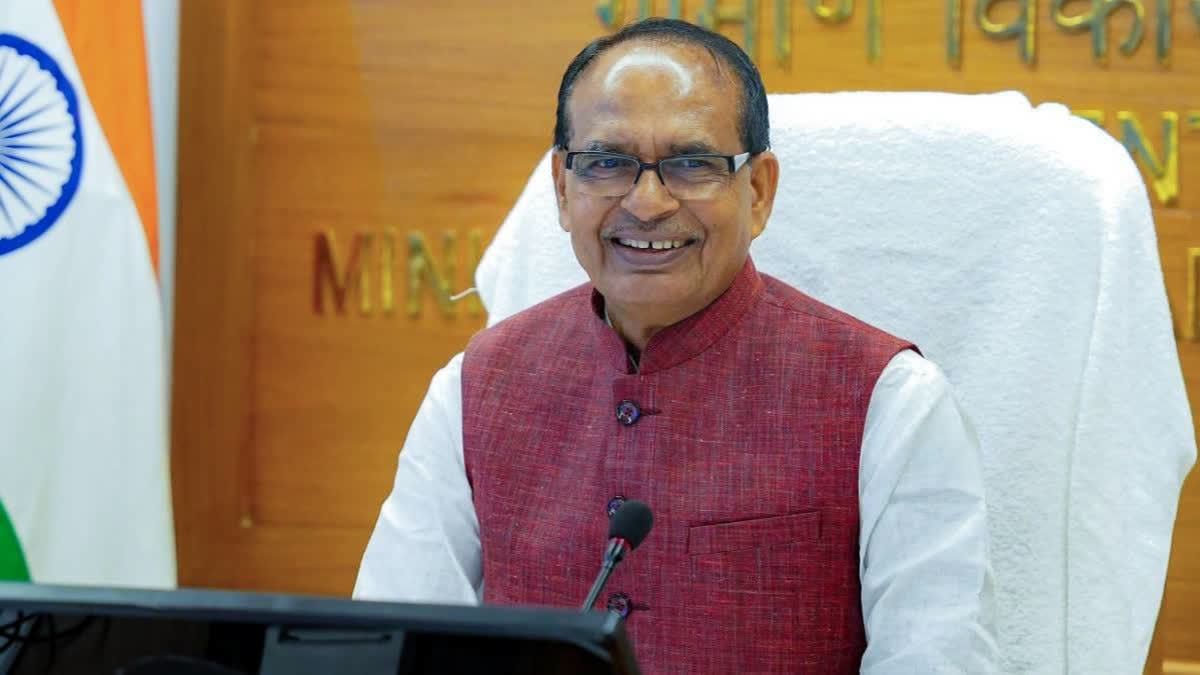

New Delhi: Union Minister for Agriculture and Farmers Welfare Shivraj Singh Chouhan on Thursday met farmers in Punjab and reviewed crops and production. Addressing a gathering, Chouhan said, "Prime Minister Narendra Modi's vision is Viksit Bharat, and we are working tirelessly with that goal in mind. Our mission is to build a glorious, prosperous and powerful India. Agriculture is the backbone of the Indian economy. In the fourth quarter of last financial year, the country achieved a growth rate of 7.5 per cent, with agriculture contributing to 5.4 per cent of it. Agriculture still accounts f ...Read More >

Bengaluru: The city is set to experience light rainfall on Sunday, June 8, 2025. Cloudy skies are also expected in the city which is expected to remain the same throughout the day. The city woke up at 05: 53 AM. The minimum and maximum temperatures are expected to range from 21 degrees Celsius and 31 degrees Celsius, respectively. The city is expected to witness the sunset at 06: 45 PM. The residents will not get respite from the humidity and it is likely to be around 73 per cent. KSNDMC shared a weather report on X Karnataka State Natural Disaster Monitoring Centre (KSNDMC) shared a weathe ...Read More >
Delhi is facing worsening pollution and erratic weather patterns, with the air quality regularly reaching dangerous levels. This is partly due to climate change, with temperature rises and unpredictable rainfall patterns caused by global warming. The industrial revolution has played a significant role, contributing to the rise in global temperatures. The effects are already being felt, with 2024 witnessing record-breaking heat in India. Despite this, there is little action from society or leadership, with courts repeatedly stepping in to address issues like pollution and farm fires. The need f ...Read More >

Dharwad: Joint director of agriculture Manjunath Antarvalli has called upon the farmers to grow millets and supply quality food items to the domestic market. Speaking after flagging off 'Walk for Millet' organised by the agriculture department in Dharwad on Thursday, he said the farmers growing millets should be encouraged in all possible ways. "Popularly known as superfoods, the millets which are little wonders have been the most sought-after food post-pandemic. High in nutritional values, the ...Read More >
Heavy rains across Tamil Nadu have led to school closures in several districts, including Chennai, on Thursday. The India Meteorological Department (IMD) has issued a yellow alert, predicting moderate rains and light thunderstorms in parts of the state. Rainfall figures show significant precipitation in multiple areas. Meanwhile, Northern India braces for a cold wave beginning December 9, with the IMD forecasting plunging temperatures in Rajasthan, Punjab, Haryana, and Uttar Pradesh.Schools acros ...Read More >
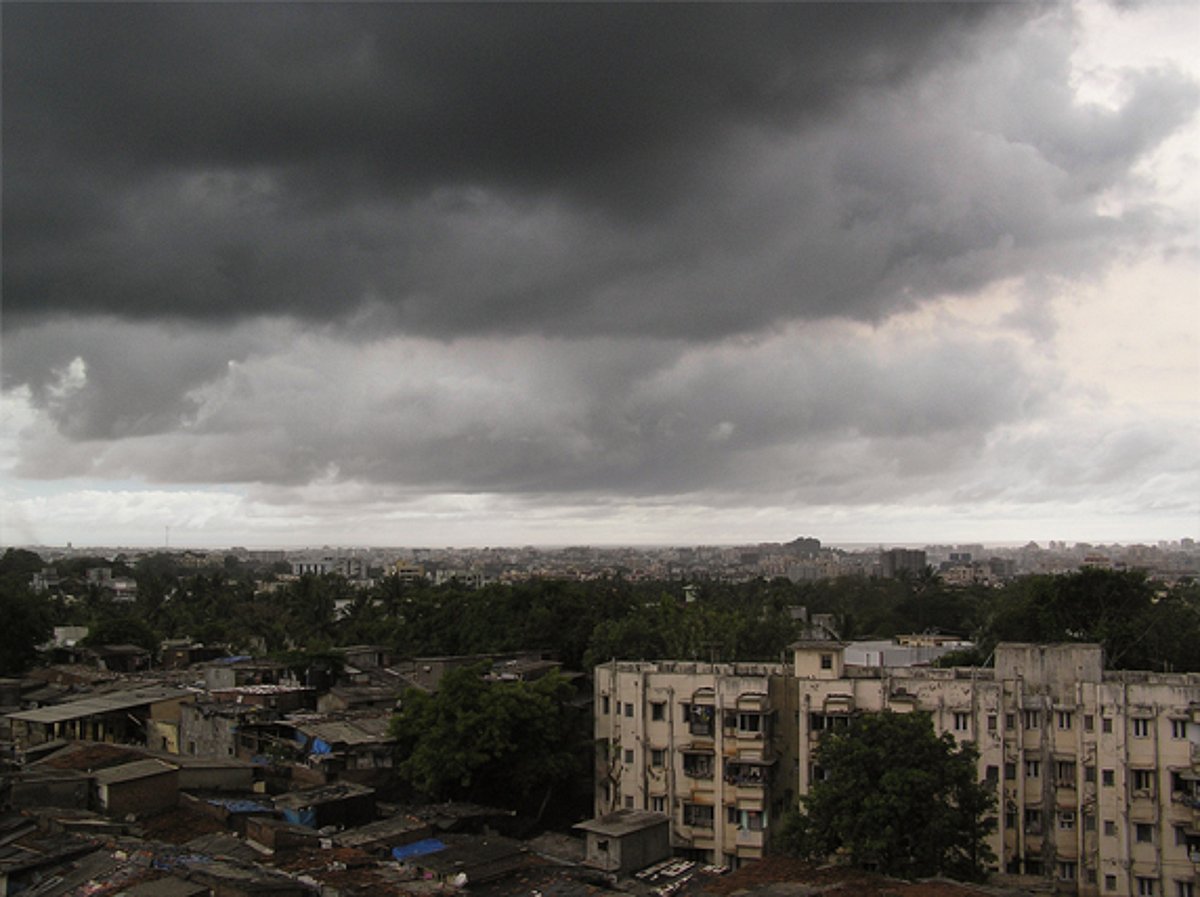
After an exceptionally early onset this year -- the earliest in 16 years -- the southwest monsoon has temporarily paused its journey across India, weather officials said. The India Meteorological Department (IMD) confirmed that while the monsoon arrived over Kerala on May 24 and made swift progress through the southern peninsula, northeast India, and parts of the west, its advance has stalled. According to IMD officials, the rainfall will remain subdued across most parts of the country for the next few days. However, reports suggest that the monsoon is expected to gather strength between June ...Read More >

Hisar, Jun 5 (PTI) Haryana Chief Minister Nayab Singh Saini Thursday announced the establishment of natural and organic mandis in Gurugram and Hisar to promote natural farming on a large scale in the state. The Gurugram mandi will cater to produce such as wheat, paddy and pulses, while the Hisar mandi will focus on fruits and vegetables grown through natural and organic methods. Also Read | Delhi: High-Level US Team Arrives for Talks on Bilateral Trade Pact With India. In addition, a committee will be formed under the Haryana Kisan Kalyan Pradhikaran to determine fair pricing for produce gr ...Read More >
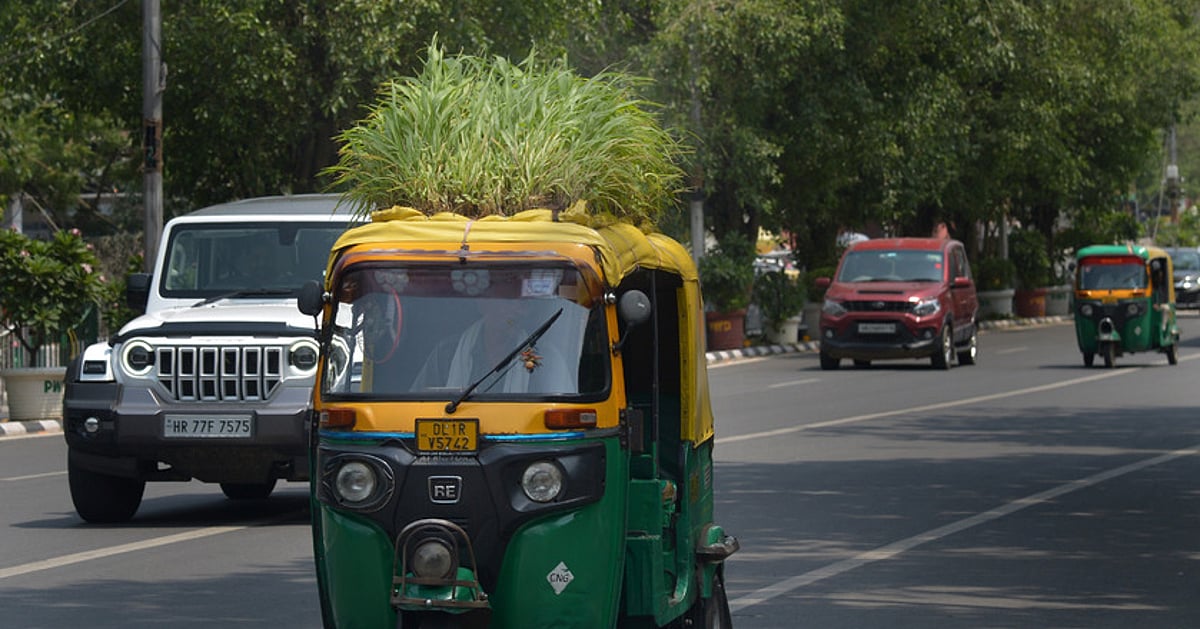
NEW DELHI: The city is in for a spell of hot and dry days, with the India Meteorological Department (IMD) forecasting a gradual rise in maximum temperatures by up to 6 degree Celsius over the next five days. While the mercury is expected to cross 40 degree Celsius, no heatwave conditions are likely, officials said on Friday. According to the weather office, the maximum temperature at Safdarjung on Thursday was 38.2 degree Celsius, about 2 degree below the seasonal average. Minimum temperature stood at 25.6 degree Celsius, also slightly lower than the normal. Similar trends were observed acro ...Read More >

Srinagar, Jun 7 (PTI) Authorities on Saturday barred Eid prayers from taking place at the Eidgah ground and the Jama Masjid in the old city here, while Hurriyat Conference chairman Mirwaiz Umar Farooq claimed that he was put under house arrest. "Anjuman Auqaf Jama Masjid Srinagar deeply regrets to inform that the authorities have once again disallowed Eid-ul-Adha prayers at the Eidgah as well as at the historic Jama Masjid in Srinagar by closing the gates of the mosque and deploying police personnel outside," the management of the historic mosque said in a statement. ...Read More >
Heavy rains lashed Thoothukudi and surrounding areas in Tamil Nadu on Sunday, causing severe waterlogging in several localities. The IMD predicts the formation of a low-pressure area in the Bay of Bengal, which is expected to intensify and move towards the Tamil Nadu coast, bringing further rainfall across the state in the coming days.Several parts of Thoothukudi and adjoining areas witnessed severe waterlogging on Sunday as heavy rains continued to lash parts of Tamil Nadu. Visuals showed water ...Read More >


New Delhi: The southwest monsoon is expected to reach Kerala within the next four to five days, marking an early onset well ahead of the usual June 1 date, the India Meteorological Department (IMD) said on Tuesday. The IMD had earlier predicted that the monsoon would make landfall in Kerala by May 27. If the current forecast holds, this would be the earliest onset over the Indian mainland since 2009, when the monsoon arrived on May 23. "Conditions are likely to become favourable for monsoon onset over Kerala during the next four to five days," the IMD said in its afternoon update. Typically, ...Read More >
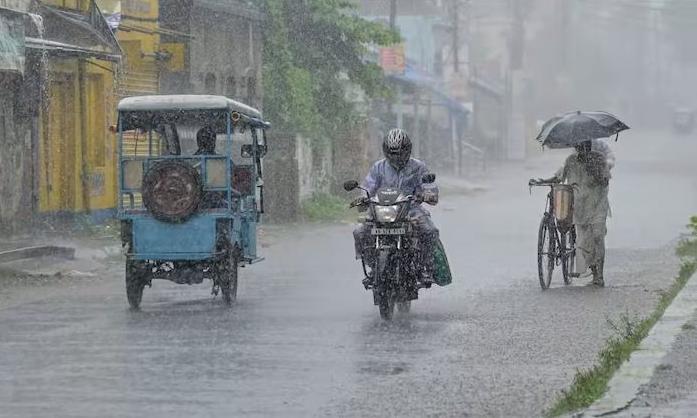

Visakhapatnam: The southwest monsoon set in over Andhra Pradesh (Rayalaseema region) on Monday, arriving nine days ahead of schedule, bringing rain to parts of the Rayalaseema and coastal Andhra Pradesh. For the second year in a row in the past one decade, the monsoon entered AP region earlier as the usual date of onset is on June 4. Last year, the monsoon arrived in AP on June 2. Director of IMD, Andhra Pradesh Stella S said southwest monsoon has further advanced into some more parts of central Arabian Sea, some more parts of Maharashtra including Mumbai, Karnataka including Bengaluru, remai ...Read More >
Hisar, Jun 5 (PTI) Haryana Chief Minister Nayab Singh Saini Thursday announced the establishment of natural and organic mandis in Gurugram and Hisar to promote natural farming on a large scale in the state. The Gurugram mandi will cater to produce such as wheat, paddy and pulses, while the Hisar mandi will focus on fruits and vegetables grown through natural and organic methods. In addition, a committee will be formed under the Haryana Kisan Kalyan Pradhikaran to determine fair pricing for produce grown using natural and organic farming practices. The Chief Minister made these announcements ...Read More >